
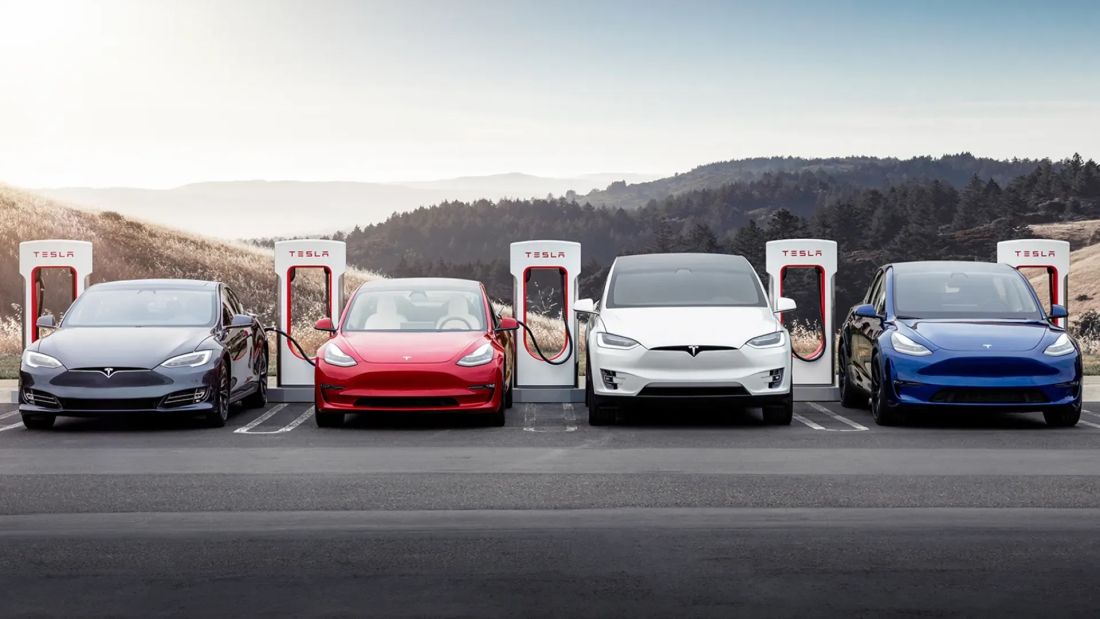
Guide to electric vehicles
In recent years, the sale of electric vehicles has risen dramatically. During 2022, there was an estimated 250,000 electric vehicles registered on the UK roads and whilst we approach the end of 2023, there is an estimated 840,000 registered today.
Now for the age-old question, is an EV the right car for you? Whether you’re considering purchasing your first electric car or just require some user-friendly tips, we’ve supplied you with a summary of the various commercial EVs on the market today.
- Electric vehicle (EV)
- Battery electric vehicle (BEV)
- Plug in hybrid (PHEV)
- Hybrid (HEV)
- Mild hybrid electric vehicle (MHEV)
- Range extended electric vehicle (RE-EV)
- Hydrogen fuel cell electric vehicle (FCEV)
With the demand for the electric car rising drastically by the day, we’ve enlisted various models of this group to allow you to have better knowledge on some of todays electric vehicles; Jaguar I-Pace, Hyundai Ioniq 5, Tesla Model 3, Kia E-Niro, Ford Mustang Mach-E, Honda e, Mercedes Benz EQA, Mazda MX-30, Audi E-Tron, BMW i4, Volvo XC40 Recharge, Polestar 2, Porsche Taycan, Skoda Enyaq and many more.


How much does an electric car cost?
In the UK, current used EVs can be purchased from as little as under £5,000.00 and for new models, you’ll find these retailing for £21,000.00 after the government funded purchase grant.
EV batteries are known to last for quite some time without the life being taken away from them, and the degradation can also be a minor experience. There will be a gradual reduction in capacity and range after several years.
The Renault Zoe and Nissan Leaf are just some of the most commonly used electric cars on the road today.
What are the running costs of an EV?
Fuel costs are much lower for an EV over the more commonly used nonelectric vehicle on our roads. The cost to charge an EV usually comes down to the size of the battery and the whereabouts of where you charge at.
Drivers that can charge at the workplace usually receive free charging and there is no benefit-in-kind liability in association with this.
The running costs of an EV total to the amount of 9p per mile, whereas for the general petrol car, will set you back around 18p per mile. The average driver will travel around 6,800 miles per year, costing them just under £600.00 for that year with an electric car.
Thanks to electric cars, the servicing and maintenance of these cars is deemed considerably lower than the general fuel combustion vehicles.
Electric car MOTs
Like all cars on the UK roads, they’re required to undertake an annual MOT test after they’ve surpassed the age of 3 years and above. The only difference, is that there’s no emissions test.
Electric car road tax
Following changes to the rates of Vehicle Excise Duty (VED) in April 2017, zero-emissions vehicles are exempt from ‘road tax’ in the UK.
EVs also attract much lower rates of benefit in kind (BiK) company car tax and sit in the lowest 1% band of company car tax for 2021 / 2022.
Electric car charging points
Charging an electric car can be done in 3 methods, from a home charging point to the workplace and a public charging station. The world of EV charging can be rather confusing, with all the key parts such as voltages, charging speeds, battery sizes, different rates, ranges and connectors.
Electric car range
For newer EVs, you’ll be looking to achieve a full reading of between 150 to 300 miles, whereas for an older vehicle, you’ll be looking at around 100 miles.
The driving an EV experience
The first thing you will come across is the sound of silence. With the lack of a gearbox, the acceleration and pickup speed is quite smooth and seamless. With impressive torque delivery from a complete standstill, even the lower end cars can be rather nippy off the line.
Other than a slight hum when being on the move, the only other noises you’ll receive will be wind noise and tyre noises.
Cons of owning an EV
Electric cars might well indeed be packed with fantastic technology, providing a smooth and fast driving experience. Yet with every new technology there are disadvantages and differences which require some consideration.
- Limited battery range
On average, a petrol car will take us on a four or five hundred mile trip. A diesel car will quite easily drive up to 700 miles on a single fill up. An example of an electric car however is rather different, the E-208 will require a recharge every 217 miles.
- Charging infrastructure worries
Surrounding the UK, we’re thankful that we’ve got just shy of 8,400 petrol stations. As of 2023, we’ve been gifted with up to 28,000 charging stations, spread over 21,000 locations. Whilst there isn’t equivalence across these technologies, as it takes a lot longer to charge an EV compared to filling up a petrol tank, it goes some indication of the growth of the charging network - something of which will only continue to increase. This is not to say an electric car is right for everyone. If you don’t have off-street parking at home, being independent upon public charges makes driving a fair bit less convenient, though some still manage this.
There are also concerns around how easy it is to charge an EV for somebody with a disability. With manned petrol stations having staff on hand to assist with pumping fuel, but most EV stations are left unattended. Charging leads and plugs being relatively heavy and unwieldy , especially when juggled with moving a wheelchair and negotiating kerbs.
- Long charging times
Filling up a petrol and diesel car takes as little as 5 minutes. Whereas to charge an EV, you’re estimated to spend between 30 minutes to over an hour when using the latest public rapid charging points. The time to charge these fantastic vehicle might seem like a deal breaker, until you dig much further.
Environment impact
I’m sure we all appreciate the zero emissions that these cars are capable of producing. However, the use of electricity provides a direct impact on how environmentally friendly these really are. The production for these fancy lithium-ion batteries are considerably harmer to the environment than the production of a general fuel combustion vehicle.
For access to our electric vehicle range, please use the following link below.